Times Square: How to Actually Enjoy It
Where to sit, how to shut down every hustle, what never to buy, and when to go, so Times Square is your experience and not someone else's.
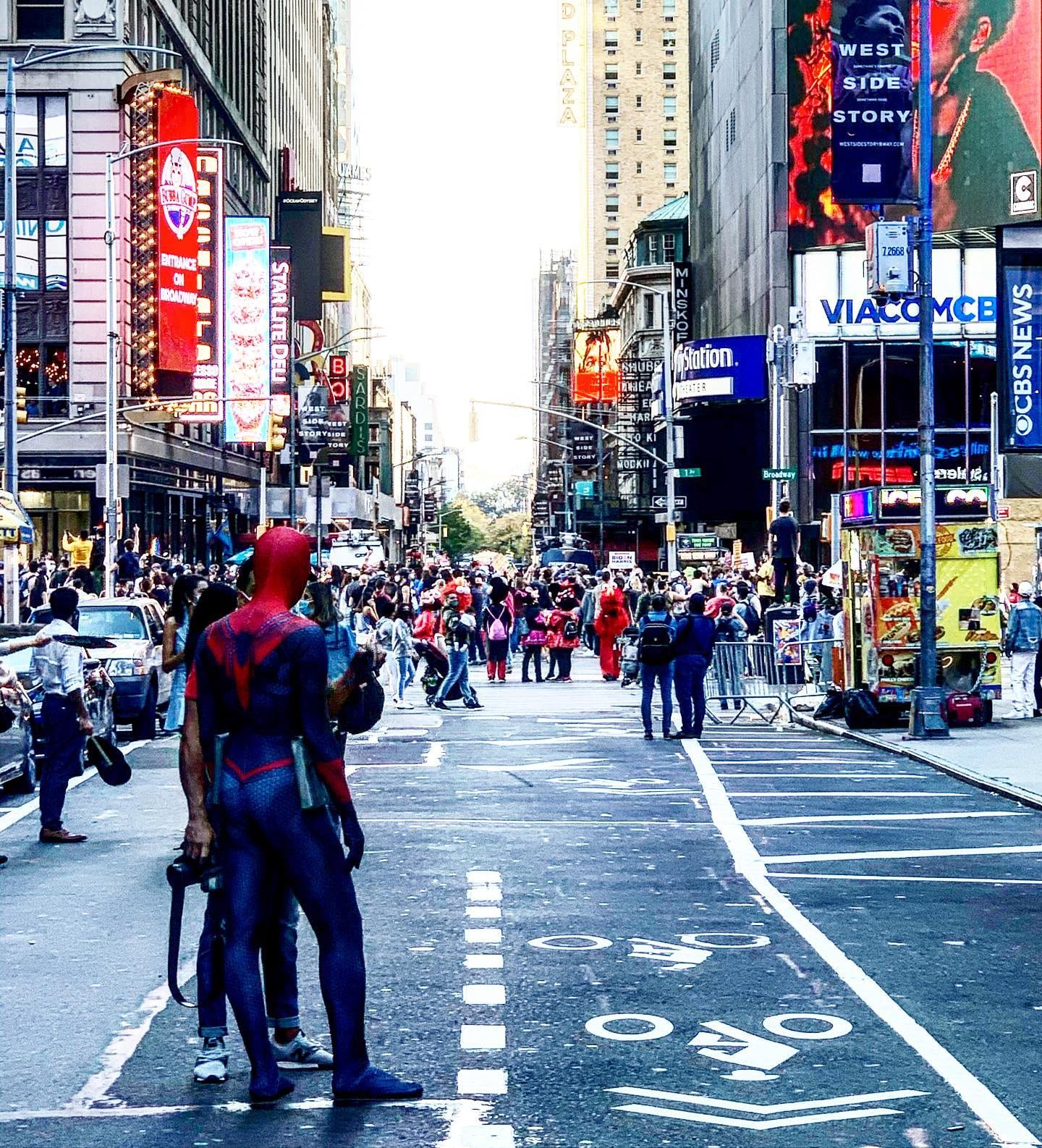
Most New Yorkers will tell you to skip Times Square. We’re telling you the opposite, and we mean it. It’s on the M List.
Times Square is one of the truly unique places on the planet. Nowhere else do more than 200,000 people a day, and over 300,000 on the busiest days, pour through a few blocks of light and noise at the center of the busiest city in the world. It’s the biggest melting pot there is. Stand still for ten minutes and you’ll hear six languages and see every kind of person there is.
The energy is unmatched. That part isn’t hype.
Here’s the thing, though. Times Square has an entire economy built around separating you from your money and your attention. If you don’t know how it works, you’ll spend two hours being worked instead of two hours experiencing the place. The whole point of this guide is to make it your experience, not someone else’s.
Read this, then go.
The right way to do it: sit down
This is the single biggest shift in how to approach Times Square, and almost nobody makes it.
Don’t try to see everything. There’s nothing to see, exactly: no monument, no view, nothing to check off. Times Square isn’t a sight. It’s a scene, and the way you experience a scene is by stopping and letting it happen around you.
So find a place to sit and people watch. That’s the activity. That’s the whole thing.
Here’s what surprises people: once you find a spot to sit, you can truly relax. It sounds impossible in the middle of all that noise, but the moment you stop moving, the pressure comes off. Nobody hustles someone who’s sitting down and settled in. The crowd stops being something you push through and becomes something you watch. It goes from stressful to strangely calm in about five minutes.
Where to sit
The red steps at Father Duffy Square, at 47th Street between Broadway and Seventh Avenue. The big red glass bleachers above the TKTS booth are the best seat in Times Square, and they’re free. You’re up high, facing south down Broadway into the full wall of screens, and you can sit as long as you like. They’re open most days, weather permitting.
The tables and chairs in the pedestrian plazas. Broadway is closed to cars from 42nd to 47th Street, and the plazas have movable tables and chairs. They’re free and first come, first served. Grab two chairs, put your bag on one, and settle in.
The benches and ledges scattered through the plazas between 43rd and 47th. Less comfortable, but almost always available.
The north end of Duffy Square, around 47th, which is a little calmer than the middle and gives you the whole square as your view.
Sit for twenty minutes. Then get up, move a block and sit somewhere else. The square looks completely different from different angles and at different times of day. Move around, take your time, and don’t rush.
That’s it. That’s the right way to do Times Square.
The hustles, and how to shut them down
Now the part that makes or breaks your visit. None of this should scare you off. It’s just a system, and once you can see the system, it stops working on you.
Rule number one: never take anything from anyone’s hand
This is the most important line in this guide.
If someone holds something out to you, whether it’s a CD, a mixtape, a flyer, a bracelet, a rose, a toy or a bottle of water, don’t take it.
The moment it’s in your hand, the interaction changes. Now it’s a transaction. They’ll tell you it’s free, then ask for a donation, then get insistent, then get loud, and sometimes they’ll bring a friend over. People hand over twenty dollars for a CD they never wanted, just to make it stop.
The fix is simple, and it works every time: keep your hands down and keep walking. Don’t reach out, and don’t accept it “just to be polite.” Politeness is the hook.
If something is already in your hand, hand it straight back and keep walking. Don’t negotiate.
If someone approaches you, keep moving
You’ll be approached constantly: comedy club ticket sellers, bus tour sellers, costumed characters wanting a photo, people with clipboards, people with a pitch.
“No, thank you” is a perfectly good first answer. Say it once, clearly, and keep walking.
If they keep at it, stop responding entirely. Don’t argue, explain, apologize or make eye contact. Just walk as if they aren’t there. It feels rude. It isn’t. Engagement is what they’re working for, and silence ends it faster than anything you could say.
Don’t stop walking to have a conversation. Almost every bad Times Square experience starts with a visitor stopping to be polite.
The uninvited photographers
You’ll see people with serious-looking cameras take your picture as you walk by, then immediately show you the shot on the screen.
It looks like a nice gesture. It’s a sales pitch. They took the photo to create a sense of obligation, and now they want you to pay for it or book a session.
Walk away. You didn’t ask for the photo, you don’t owe anything for it, and you don’t have to look at the screen. Don’t take the camera, their phone or a printed copy. Same rule as above: nothing goes in your hand.
The costumed characters
The Elmos, the Spider-Men, the Statues of Liberty, the Minnie Mouses. They aren’t affiliated with anyone, they work for tips, and some of them are pushy about it. By law they’re supposed to stay inside the painted “designated activity zones” in the plazas, so if you don’t want to deal with them, you can walk around those zones.
If you want a photo, that’s fine; it’s part of the place. Just know that it costs money. Agree on the amount before the photo and have a small bill ready. They may ask for more afterward, and the way to avoid that is to settle it first.
If you don’t want a photo, don’t pose, don’t let them put an arm around you, and keep moving.
The street shows
These are genuinely worth watching: acrobatic crews, breakdancers, bucket drummers. Some are excellent performers who’ve worked these blocks for years.
But watch from a few rows back.
Here’s why. The show is built to form a circle, pull people from the front row into the act, then pass the hat with a very specific expectation of what the front row gives. If you’re in front, you’re in the show, and the ask at the end will be pointed and public.
Stand three or four rows deep. You’ll see everything just as well, you won’t get pulled in, and you can leave whenever you like without a scene.
If you enjoyed it, tip. Really. A few dollars for a good street show is money well spent, and these performers earn it. The difference is that you’re choosing to tip instead of being maneuvered into it.
Watch your belongings
This is a dense crowd where everyone’s attention is pointed up at the screens, which makes it ideal for pickpockets.
- Wallet in a front pocket, not a back pocket
- Bag zipped and in front of you, not behind you
- Phone in your pocket when you’re not using it, not in your hand while you stare at a billboard
- Backpack off your back in the thickest crowds
Nothing dramatic. Just normal city habits, applied a little more carefully than usual.
Don’t buy anything here
The blunt version: Times Square is the worst place in New York City to spend money, on anything, for any reason.
Skip the street vendors
The souvenir tables, the “I Love NY” shirts, the knockoff bags, the phone accessories, the selfie sticks. They’re overpriced, poor quality, and there’s often no way to return anything.
If you want a New York souvenir, you’ll do better and pay less in a museum shop, on Canal Street or in almost any neighborhood shop. If you want a hot dog, the carts here charge tourist prices for the same dog that costs far less twenty blocks away.
Skip the restaurants, all of them
This is the one we feel strongest about.
The restaurants in and right around Times Square exist because of foot traffic, not because of the food. They don’t need repeat customers, because they’ll never see you again, and the business model reflects that.
What you get: high prices, mediocre food, rushed service, automatic tips added to the bill, drink minimums and, at some places, billing practices that have drawn complaints for years. Check the receipt before you pay. What’s normal to tip, and what isn’t, is covered in tipping and money in NYC.
Walk five to ten minutes and eat well instead. The food gets dramatically better and cheaper the moment you leave the square:
- Ninth Avenue in Hell’s Kitchen, roughly 42nd to 55th Street. This is the move: every cuisine, real restaurants with real regulars, reasonable prices.
- Restaurant Row, 46th Street between Eighth and Ninth. Built for pre-theater dinners, so it’s fast and used to a curtain deadline.
- Koreatown, 32nd Street between Fifth Avenue and Broadway. About fifteen minutes south on foot. Excellent, and open late.
- Almost anywhere in the 40s and 50s west of Eighth Avenue. Just get past Eighth.
Same rule for bars, and for gift shops. Same rule for the ticket sellers on street corners offering discounted show tickets: buy from the official TKTS booth under the red steps or the theater’s own box office instead.
The only things worth your money inside the square are a tip for a street performer you actually enjoyed and a Broadway ticket from a legitimate seller.
When to go
Times Square is a different place depending on the hour, and the hour matters more than anything else in this guide.
Best time: after dark. The screens are the whole point, and they need the dark to work. Any time from sunset on.
Most peaceful: 6 to 8am. Worth setting an alarm for once. The screens run around the clock, the streets are nearly empty, and you can stand in the middle of Broadway and hear yourself think. It’s eerie, and it’s the version of Times Square almost nobody sees. Photographers, this is your window.
Late at night, after about 11pm on a weeknight. Thinner crowds, full light, and most of the hustle has gone home.
Best of all: after dark, in the rain. The screens reflect off the wet street and the whole block turns into saturated color above and below you, with the crowd thinned out to the point where you can see it. It is the most underrated sight in this city and nobody plans for it. We made the case in NYC on a rainy day.
Avoid 5 to 8pm on weekends. Theater crowds, visitors and commuters all at once. It’s a solid wall of people.
Avoid December, unless you specifically want the holiday chaos. Between Thanksgiving and New Year’s, it’s at capacity all day long. If you’re here for the season, walk the holiday windows route instead.
New Year’s Eve: don’t, unless it’s a life goal. You stand in a fenced-off pen for many hours with no bathroom and no re-entry if you leave, and bags and umbrellas aren’t allowed. People do it once and never again. If it’s on your list, go in knowing exactly that, and read our Times Square New Year’s Eve guide first.
Practical notes
Getting there: the Times Sq–42 St station is served by the 1, 2, 3, 7, N, Q, R, W and S shuttle, and the A, C and E stop at 42 St–Port Authority a block west, connected underground. It’s the busiest station in the system, so expect a crowd below ground too. New to the subway? Read the NYC subway for first timers.
Bathrooms: the hardest part of Times Square. Your best bets are hotel lobbies on the side streets, the big chain stores, and the Port Authority Bus Terminal at 42nd and Eighth. The NYC public bathroom guide has the full strategy.
Where to stand for the classic view: the red steps at 47th looking south, or the middle of the plaza around 44th looking north. Both give you the wall of screens.
Crossing streets: the plazas mean less traffic on Broadway itself than you’d expect, but Seventh Avenue and the cross streets are live. Watch for turning cars, and for bikes and delivery riders, who move fast through here.
Dress for standing around. You’ll be on your feet, outdoors, for longer than you plan.
The short version
Go after dark or go at dawn. Find the red steps or grab a free chair in the plaza. Sit down, relax, and watch the entire world walk past.
Take nothing from anyone’s hand. Say “no, thank you” once, then keep walking as if they aren’t there. Watch the street shows from a few rows back, and tip if you liked it. Buy nothing, and eat on Ninth Avenue.
Do it that way, and Times Square is what it should be: the most concentrated dose of human energy on the planet, and it costs you nothing.
Questions about anything in this guide? Reach MUSEENYC at museenyc.art@gmail.com or @museenyc on Instagram.
Read our Times Square review, then go see it for yourself → museenyc.com