Citi Bike the Hudson Greenway: The Battery to the GWB (and Into the Bronx to Eat)
A full day on one bike path: twelve miles up Manhattan's west side, under the George Washington Bridge, and into the Bronx to eat.
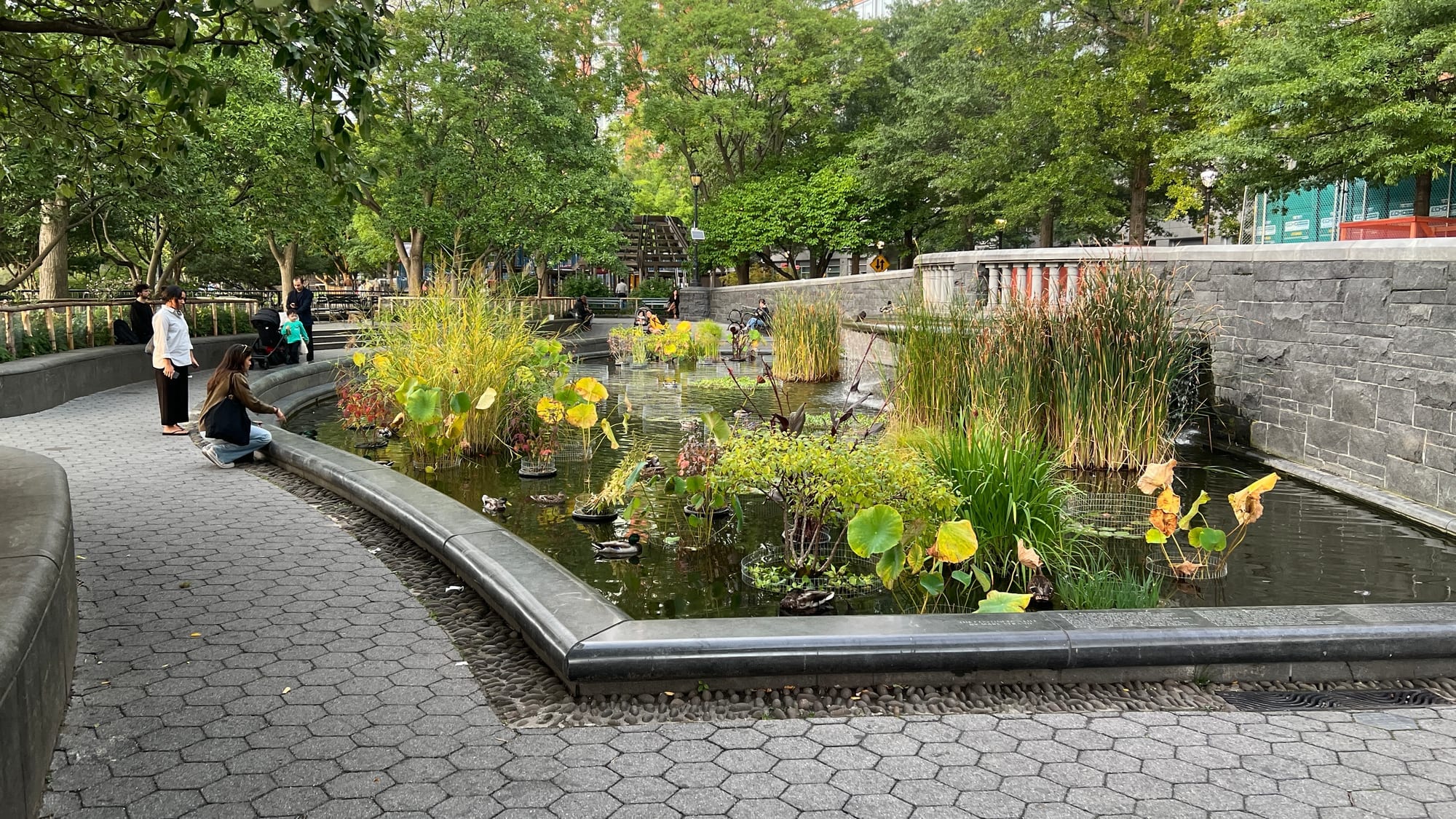
There’s a single unbroken bike path, the Hudson River Greenway, that runs from the southern tip of Manhattan to the George Washington Bridge. Most people who live here have never ridden the whole thing.
It’s about twelve miles. It’s flat for eleven of them. It hugs the western edge of the island the entire way, so you watch Manhattan change neighborhood by neighborhood from the outside, like someone slowly turning a model in their hands.
Then you keep going, cross into the Bronx, and eat like you earned it. Which you did.
Before you go
The bike. A Citi Bike Day Pass is $25 and gets you unlimited 30-minute rides on classic bikes. That’s the catch worth understanding: unlimited rides, not unlimited time. Dock the bike and grab a new one every half hour, or the overage charges stack up fast. New to riding here? Read Biking in NYC first; it covers street safety, passes and ebikes.
That sounds annoying. It isn’t. The natural stops on this route land roughly every 25 to 35 minutes anyway, and docking forces you to actually get off and look at things.
E-bikes cost extra per minute, even on a pass. Worth it for the northern half if your legs are done.
Timing. Give yourself four to six hours end to end with stops. A decent rider going straight through does it in about 90 minutes. Don’t ride it straight through. That’s the whole point of the guide.
Go early. The path south of 59th gets crowded with walkers, joggers and people who have never been passed on the left before. Before 10am on a weekend, it’s yours.
Direction matters. Riding south to north, the wind is usually at your back, and the hard climb comes at the end, once you’ve warmed up. The views also get better as you go, which is the right way to build a day.
The ride, south to north
The Battery to Tribeca (miles 0–1.5)
Start at the very bottom, where the path begins in Battery Park with the harbor wide open in front of you. The Staten Island Ferry churns off to the left, Governors Island sits there, and the Statue is in the distance.
Head north and you’re immediately in Battery Park City, which feels like a different city. Quiet, planned, tree-lined, nobody in a hurry. The esplanade here is one of the most pleasant half-miles in Manhattan, and it’s almost always half empty. It runs right past Rockefeller Park, the best lawn downtown.
Worth stopping: the Irish Hunger Memorial at Vesey Street. A transplanted piece of County Mayo hillside sitting between glass towers. It’s strange and it works.
Tribeca to the West Village (miles 1.5–3)
The buildings drop in height, the cobblestones start, and suddenly there’s water on both sides of you at Pier 25 and Pier 26.
Hudson River Park starts doing real work through here. Beach volleyball, mini golf, and a tide deck at Pier 26 that walks you out over the estuary.
Worth stopping: Pier 45 at Christopher Street. A big open lawn, everybody sprawled out, and the best sunset crowd in the city. If you’re riding in the evening, end here instead of starting here.
Chelsea (miles 3–4.5)
Little Island floats off Pier 55 on its concrete tulips. Love it or think it’s silly, it’s free and it takes ten minutes.
The path widens. You pass the Chelsea Piers sports complex, and the neighborhood behind you turns from brownstones to galleries to the southern end of the High Line.
Worth stopping: the Pier 64 lawn, if you want grass and quiet. It’s the least-known good lawn on the west side.
Hell’s Kitchen and Midtown (miles 4.5–6.5)
This is the least scenic stretch and I’ll say so. Cruise ship terminals, the Intrepid with a real aircraft carrier parked at the pier, and highway noise from the West Side Highway on your right.
Ride it. Don’t linger. It’s the price of admission for what comes next.
The Upper West Side and Riverside Park (miles 6.5–9)
Here’s where the ride turns.
At 72nd Street the path slips into Riverside Park and everything changes. Trees close overhead. The traffic noise drops away. You’re riding along the water with a park above you on a bluff, and for a few minutes it doesn’t feel like Manhattan at all.
Worth knowing: the 79th Street Boat Basin is closed while the city rebuilds it, so don’t plan a stop there. Keep riding to the Cherry Walk, which runs from about 100th Street to 125th. It’s exactly what it sounds like, and it’s spectacular for about ten days in April.
Grant’s Tomb sits up on the hill around 122nd if you want to detour and answer the riddle in person.
Harlem and Hamilton Heights (miles 9–10.5)
The park narrows and the path runs tight along the water. Across the river, the Palisades cliffs rise up on the Jersey side, and they get taller the further north you go.
You’ll pass under the Riverside Drive Viaduct at 125th, a beautiful piece of early-1900s steel that most people only see from a car.
Worth stopping: West Harlem Piers Park at 125th. Small, well designed, with a great view of the river. There’s a food and drink scene right up the block if you want a real break.
Washington Heights and the GWB (miles 10.5–12)
The last stretch is the best stretch.
Fort Washington Park is wide and wild and feels nothing like the manicured parks downtown. The path runs right at the water’s edge under the cliffs.
And then the bridge appears above you, and it is enormous. You ride directly underneath the George Washington Bridge, with a 3,500-foot span overhead and traffic humming somewhere far above.
Do not skip this: the Little Red Lighthouse sits at the base of the bridge’s eastern tower. It’s a real lighthouse from 1880 and the subject of a beloved children’s book. The bridge dwarfs it so completely that the whole scene is faintly absurd. This is the money shot of the entire ride, and it’s free.
Sit on the rocks here for a while. You’ve done twelve miles.
Keep going north into the Bronx
Most people stop at the bridge. Don’t.
Continue north through Fort Tryon Park. This is the one real climb of the day, and it’s a grind, so switch to an e-bike at a dock if you want. At the top is The Met Cloisters: medieval art in a building assembled from parts of actual European monasteries, overlooking the Hudson. If you have an hour, it’s one of the best museums in the city, and it’s included with Met admission. New York State residents can pay what they wish, which is covered in free and pay-what-you-wish NYC museums.
Then down through Inwood Hill Park, which holds the last old-growth forest in Manhattan. Real trees. Caves where the Lenape sheltered. You are still in Manhattan, and it does not feel like it.
Cross the Broadway Bridge into Marble Hill, which is technically still Manhattan, and then Kingsbridge. Now you’re in the Bronx.
Eat
Arthur Avenue, Belmont. About four miles east of Kingsbridge, and the reason to make the trip. People call it the real Little Italy, and the people who say it aren’t wrong. The Arthur Avenue Retail Market has been running since 1940. Fresh mozzarella pulled in front of you, bread from bakeries that have been at it for generations, old-school red sauce restaurants, cannoli filled to order. Go hungry. Genuinely hungry.
Kingsbridge and Fordham. If you don’t want the extra four miles, the food right where you land is excellent and cheaper. Dominican, Mexican, Puerto Rican. Roast pork, tacos, mofongo, and the best café con leche you’ll have all week. Kingsbridge Road and Fordham Road are both worth walking.
City Island. The ambitious version, if you started at 8am and want seafood at a waterfront shack that feels like New England. It’s far. It’s a commitment. It’s great.
Getting back
Bike it. Twenty-four miles round trip. Doable, and the southbound ride at sunset, with the light on the Palisades, is better than the northbound one.
Take the subway. The easy call, and no shame in it. Dock the Citi Bike and walk to the train. If the system is new to you, read the NYC subway for first timers first.
- B, D or 4 at Fordham Road, from Arthur Avenue. The B and D stop and the 4 stop are separate stations.
- 1 at 231st or 238th Street, from Kingsbridge.
- A at 190th Street or Dyckman Street, if you’re bailing near the Cloisters.
- Metro-North at Fordham, the fastest way to Grand Central if that’s where you need to be.
Bikes are allowed on the subway at all hours, but you’re on a Citi Bike, so just dock it and walk away. That’s the entire advantage of not owning the thing.
Practical notes
- Dock availability is the only real failure mode. Check the Citi Bike app before you commit to a long segment, because popular docks fill up on nice weekends.
- There are bathrooms at Pier 25, Pier 40 and in Riverside Park. Plan around them.
- Water fountains along the greenway run seasonally. Carry a bottle.
- The path floods and closes in a couple of spots in heavy rain. Check before you go.
- The stretch under the GWB gets dark early. Don’t be up there after sunset without lights.
- Helmets aren’t required for adults in New York. Twelve miles next to a highway is a good day to wear one anyway.
The short version
Battery Park at 9am. Little Red Lighthouse by noon. Cloisters at one. Arthur Avenue by three, eating until you can’t. Train home.
That’s a full day in New York, most of it outdoors and most of it free. You’ll have seen more of the city than most people who’ve lived here ten years.
Want company on it
This route is free to ride and the directions above are the whole thing. If you would rather not navigate it alone, we run it as one of our follow-me bike tours, with the stops, the timing and the photographs taken care of.
Questions about anything in this guide? Reach MUSEENYC at museenyc.art@gmail.com or @museenyc on Instagram.
More NYC days worth planning → museenyc.com